Monday, 17 November 2014

The Dawn of a New Cold War?

In this, the month of the 25th anniversary of the fall of the Berlin Wall, it is perhaps prudent to look at the current geo-political crisis in Ukraine and ask if we are drifting towards the start of a new Cold War. Recent events at the G20 summit in Brisbane have brought the tensions sharply into focus, forgetting for a moment the shared experience of koala cuddling. Intransigent positions taken on all sides, tough rhetoric and no discernible nod towards compromise have increased the chances that a full blown diplomatic collapse between Russia and the West will evolve and lead to a return of the mistrust and suspicion of the 1950's and 60's. For Brisbane 2014 can we read Yalta and Potsdam 1945?

Brisbane 2014?
Potsdam 1945?


Whilst there is little doubt that the current frostiness in relations have echoes of the post war period, the extremes of those particular times are missing today, certainly from a European angle. In 1945 the continent lay exhausted from 6 years of war and the latent hostility between political ideologies created an environment that sparked the Cold War. Relatively speaking, Europe today is a more settled place, there is no fear of Communism spreading across the globe and the oft quoted 'nuclear shadow' does not take centre stage in political matters.  However, the escalation in direct armed conflict has worsened this crisis rapidly and pushed both sides to an intransigent position. The West's economic sanctions are 'biting plenty good' according to President Obama and yet commentators this weekend indicated that Putin and Russia were playing the long game and waiting for the cracks to appear in his opponents' stance, rather like West Berlin post 1945 one might argue. Even if Russian dominance was a key motive for Putin's stance on Ukraine the absence of mass numbers of Russian troops means that easy parallels with the Soviet domination of post war Eastern and Central Europe are probably best avoided, but if we replace the 'Red Army' with control of oil and gas supplies then perhaps the bargaining chips are not too dissimilar after all.

A detailed overview of the original situation can be found here by Robert Legvold, Professor in Political Science at Columbia University. In the meantime we wait to see if the blunt assessments of the situation expounded by Obama, Cameron and Merkel this weekend will become the 'Iron Curtain' moment of our times and confirms a retreat to a new Cold War, one which could leave Russia dangerously isolated 25 years to the month that the Communist experiment started to unravel.

S Shergold

Tuesday, 14 October 2014

In Our Time History Podcasts

BBC Radio's podcast archive is a rich source of expert information for teachers and students alike. A fine example of this is the series linked here, the 'In Our Time History' series. The format is simple - a significant event, individual or era is looked at and discussed in depth by expert historians and pitched in such a way as to accessible to all whilst stretching those with a particular interest. Of direct relevance to our current A Level historians might be Rana Mitter's views on the Sino-Japanese war, Saul David's analysis on the importance of Clausewitz's 'On War' or Richard Evans and Eric Hobsbawm discussing whether an understanding of history could lead to us predicting the future. The benefit of listening to such clear and concise expert evaluation should not be underestimated in a time when historical writing can sometimes become a rather tangled web.
The sister series, just called 'In Our Time', can be found here and covers a myriad of areas, history among them. For broader thinkers and cross curricular students there are also science and philosophy editions. Just one word of caution; much as presenter Melvyn Bragg may be admired for the breadth of his knowledge in chairing these discussions, his tendency to interrupt far more expert opinion and his rather pompous tone can grate after a while. Overall though, an excellent resource and an opportunity to engage with real academic debate with those UCAS forms and university interviews on the horizon.
S Shergold

Tuesday, 29 April 2014

The Hungarian Rising and Its Extraordinary Aftermath

The 'History in an Hour' website is well worth a few visits, and it records here the dramatic events of the 1956 Hungarian Rising, eventually brutally suppressed by the Soviet Union in a manner clearly much appreciated by modern day Russia's Vladimir Putin, the ex-KGB spy (albeit a low ranking one) turned Russian president and would-be Soviet resurrector.

The Soviet action in Budapest in November had a dramatic footnote at the Melbourne Olympics, in the water polo semi-final match between none other than Hungary and its oppressors, the Soviets.  According to 'History in an Hour's' Rupert Colley, Hungary were the water-polo superpowers of the time, and having been in virtual isolation at the time their fellow Hungarians were being slaughtered in the streets by Soviet tanks, the water-polo players were determined to seek their revenge on their hated opponents.  They won the vigorous match handily, although it was a young Hungarian player who eventually ended up with blood on his face, causing the match to be known as the 'blood in the water' match.  Read about it here.

Wednesday, 2 April 2014

Canute the Great

King Canute - or Cnut in the spelling we should probably be seeking to avoid - is still one of the most misunderstood monarchs in English history.  And yet he should be seen as one of our greatest rulers, even if he was not, of course, English himself, but the last conqueror before William.  Schools now tend to cover him too briefly as part of the monarchical timeline before the Conquest, but the British Museum Vikings exhibition may be in the process of resurrecting his reputation.  The Guardian saw fit to write a brief and positive note on one of England's greatest kings here, and perhaps it is time that he was restored to a more prominent position in school curriculums?  Here's to Canute the Great.

Re-booting with Pop History

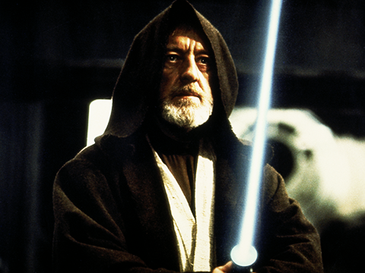
As a short starting post for the possible re-booting of this blog, some 3 years from the last item, I have to say that this letter from Alec Guinness - tweeted by @lettersofnote on the late actor's 100th birthday - is a gem.  Referring to his then film project, something called "Star Wars", Guinness writes disparagingly of the "rubbish dialogue" that he keeps being sent, which fails to develop his character in his view.  And who could disagree with the old master himself?  Despite his distinguished acting pedigree, Guinness found himself wafting around on screen generally uttering phrases such as "Use the Force, Luke" in different and would-be mysterious intonations.  Mind you, although he seems to like fellow actor Harrison Ford, it's clear that he can't be bothered to remember his name, which is a pity given that Ford reputedly shared Guinness' view on the execrable nature of the dialogue he was meant to be speaking.  He famously shouted at director George Lucas that "you may be able to type this shit, George, but you sure as hell can't say it". 

I doubt either of them were too fussy at the financial security the film gave them though.


Monday, 24 January 2011

The King's Speech, Hollywood History And An Unconstitutional Act

Hollywood is in love with the British monarchy again. The King’s Speech is the surprise Oscar nominee that seems to be sweeping all before it with a heart-warming tale of a reluctant king over-coming his stammer to lead his country in defiance against one of the twentieth century’s worst monsters. There’s even a cameo for Britain’s Greatest Ever Prime Minister, as he offers sage advice to the introverted future monarch. Well, quite. Just as the film is beautifully made, wonderfully directed and sublimely acted, and rightly on course for its Oscars, it also manages to show just how much history is surrendered to art in the making of historical dramas. A backlash is already beginning against its re-writing of history, and few are more trenchant than British ex-pat and enfant terrible, Christopher Hitchens, in this article for online magazine Slate.

Vigorous as ever, Hitchens’ article is worthwhile in that it allows history teachers and students - to say nothing of the general reader - to once again cull the sources in testing the veracity of a piece of filmic history. Hitchens goes to town against the film for two major historical faults - its portrayal of Winston Churchill as a sympathetic friend to the Duke of York and future George VI; and its portrayal of the same George VI as some sort of doughty fighter against Nazism. These are, he says, quite culpably inaccurate. Churchill (as any fule kno) maintained an extraordinary commitment not to the Duke of York but his embattled elder brother, ‘David’ (Edward VIII). Whilst Baldwin was brilliantly managing the abdication of the love-struck monarch, Churchill was stuck firmly in the soon-to-be-ex monarch’s crowd of loyal cheer-leaders - Hitchens even quotes one of the future PM’s purpler passages about Edward. It wasn’t his only inter-war error of judgement of course - he remained a firm opponent of any form of self-government for India, and was responsible for the not so good return to the gold standard as Chancellor.

Meanwhile, Hitchens’ other gripe is about George VI as Nazi fighter. While the King won tremendous - and well deserved - plaudits for his stolid symbolic leadership during the Blitz, he was a fervent supporter of Chamberlain’s policy of appeasement towards Hitler, maintaining this stance even when Chamberlain had to resign by proposing fellow appeaser Lord Halifax as his replacement. Hitchens quotes historian Andrew Roberts on George’s invitation to Chamberlain to share the royal balcony before Parliament had even had a chance to debate the Munich proposals. Roberts describes this as:

“the most unconstitutional act by a British Sovereign in the present century.”

So a new film about history and new debates about historicity. A gift for the British historian at all levels!

Wednesday, 26 May 2010

American Civil War

Interesting and helpful article - especially for A2 students - on the transformative nature of the US Civil War in this month's 'History Today'. Tracing its origins back to Waterloo, and its impact forward to the industrial wars of the twentieth century, it is well worth a read.

Thursday, 13 May 2010

Vietnam videos

Two introductory videos on Vietnam from youtube have now been added to the 'History on Youtube' link bar at the left. They cover the initial US involvement, and then carry links to further episodes in the series.

Monday, 3 May 2010

New Web Page

There is a new web page with links to a number of the powerpoint presentations used in lessons. These are mainly China powerpoints for the AS students, although a couple of A2 warfare powerpoint are there as well, with more to be added.

We will also try and tidy up this blog to make it more helpful for students.

Monday, 1 March 2010

The Sarajevo Terrorists - 1914

This is part of a BBC documentary on the fateful Sarajevo assassination of Archduke Franz Ferdinand.

Why Did World War 1 Start?

The classic explanation for the origins of World War 1 as related by Blackadder to Baldrick.


Wednesday, 11 November 2009

Reform in Russia 1906-14

Russia 1906-14
1. Assess the impact of the economic (Stolypin, Industrialisation), social (church, education etc) and political (Duma, policies towards opposition) reforms that took place between 1906-14.
P146-165 in text books and handouts

2. In what ways did Russia progress as a society between 1906-14?

3. How stable was Tsarist Russia on the eve of WW1? More or less stable than in 1905?

To be finished for discussion in lessons on Mon 16th Nov 09

Tuesday, 3 November 2009

China 1927-34 - Chiang in Power and Recovery of the Communists

Answer the following questions in full

1/ How did Chiang Kai-shek attempt to consolidate power after the White Terror of 1927?

2/ What was the new Life Movement?

3/ How did the Communists recover after the disaster of 1927? How important was Mao in this?

Monday, 12 October 2009

Stolypin's Reforms

Stolypin's Reforms 1905-1911

1. What types of reforms was Stolypin trying to implement in this period?

2. What were his motivations in trying to achieve these reforms?

3. How successful was he in implementing them? Why?

These questions, along with the Duma questions, form the background info to attempt the 'dummy run' Interpretations question that has been set.

Tuesday, 29 September 2009

The Age of the Dumas 1906-17

1. Summarise the attitudes/policies/leaders of the political parties involved in the 4 Dumas using the template given in Q6 on p178/9 of your text book
2. Summarise the main features of the 4 Dumas using the template given on p179 of your text books
3. Did the 'Age of the Dumas' represent significant political change in Russia? Explain your answer
4. Did the Dumas achieve any substantial change in Russia between 1906-17?
5. Did the existence of the Duma limit the power of the Tsar in any way in this period?

Wednesday, 26 August 2009

Apologising for My Lai - William Calley Speaks Out

“There is not a day that goes by that I do not feel remorse for what happened that day in My Lai."

The words of William Calley, speaking just a few days ago in America, and reported by a blogger who was there. Calley is the only man to have been convicted of the notorious My Lai massacre during the Vietnam War, and remains to this day a controversial figure. The news of his 'apology' broke more widely on Andrew Sullivan's Daily Dish.

Thursday, 25 June 2009

FDR's Legacy

Former US President Bill Clinton considers the legacy of his illustrious predecessor here.

20 Years Ago....

'Time' magazine has an excellent 1989 anniversary issue out at the moment, reviewing that crucial year. You can see the articles online here; 1989 was the year that the wall came down, communism collapsed into the sand, Francis Fukuyama proclaimed the "end of history", Ayatollah Khomeini died, the Chinese massacred protestors in Tiananmen Square. Much of this happened over one June weekend, with the repercussions carrying on throughout the year, ending with the Christmas Day execution of the Romanian dictator Nicolae Ceaucescu and his wife. No-one doubts the significance of 1989, the consequences of which we are living with today, and the 'Time' articles provide a fascinating early overview.

Friday, 19 June 2009

Y13 Russia Background

Gents,

Below is a link to a series on You Tube called Land of the Tsars. You only really need to watch from episode 16 onwards but feel free to delve into the history of Ivan the Terrible etc if you want.

http://www.youtube.com/watch?v=rXPP1j1yahg&feature=related

In the P Drive/History/A Level History folder I have posted a reading list for next year's Russia course, the three I think might be of most use are highlighted.

I would also recommend getting a copy of A Very Short Introduction to The Russian Revolution, link to amazon page below.

http://www.amazon.co.uk/gp/product/0192853953/ref=s9_simp_gw_s0_p14_i1?pf_rd_m=A3P5ROKL5A1OLE&pf_rd_s=center-1&pf_rd_r=003J9PMPX2Y4VAZN5BGW&pf_rd_t=101&pf_rd_p=467198433&pf_rd_i=468294

Hope this is useful.


Mr Shergold

Wednesday, 3 June 2009

GCSE Weimar Revision Session

For GCSE students, there will be a revision session on the Weimar Republic on Friday at school - period 3, Room 46 with Mr. Marshall.